Earlier this year, a small group from the Veridian team traveled to KBIS (the Kitchen & Bath Industry Show) to see what’s coming next in home design.
They didn’t come back talking about one big trend.
If anything, what stood out most was how different everything felt.
It was more balanced. There were still statement pieces, but they were layered into spaces that felt more grounded and thought through.
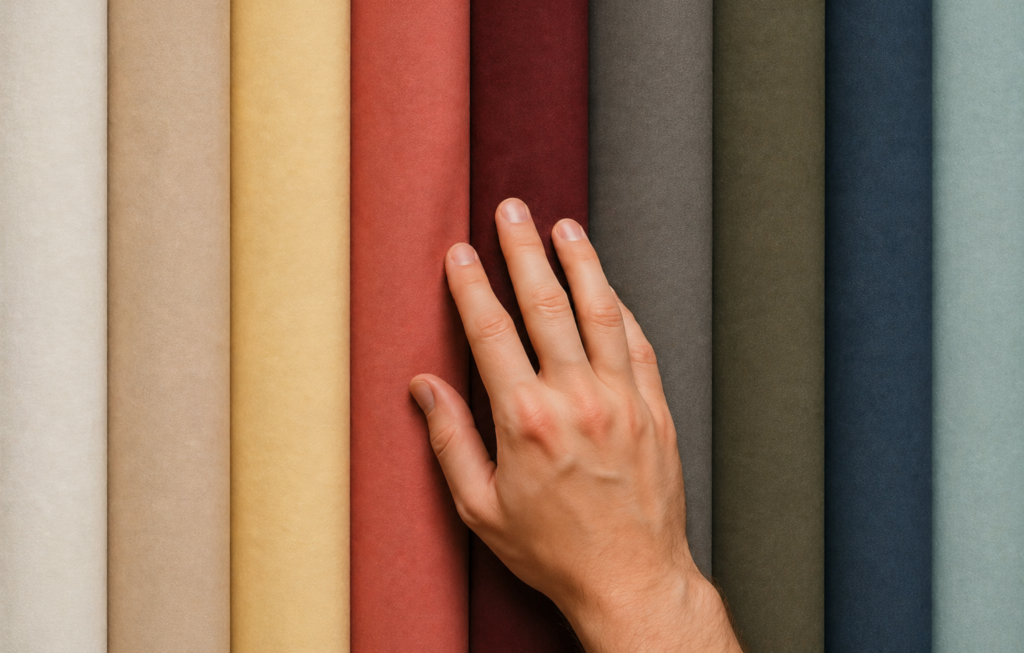
Color Feels More Open, but Still Grounded
Color showed up in a wider range than expected.
It wasn’t all warm or all cool. Both were there, just used differently depending on the space.
Across the show, they saw:
- Warm neutrals like cream, beige, and soft khaki
- Earthy greens and olive tones
- Cooler shades like blue-gray and soft teal
- Deeper tones like auburn, burgundy, and muted reds
Some spaces leaned warmer. Others pulled in cooler tones. But none of it felt disconnected.
A lot of that comes back to the base. Neutral tones that hold everything together and give the palette some consistency, even as the colors shift.
What stood out:
There’s more flexibility in color, but it still feels intentional. Each space has its own direction, without losing that overall sense of cohesion.
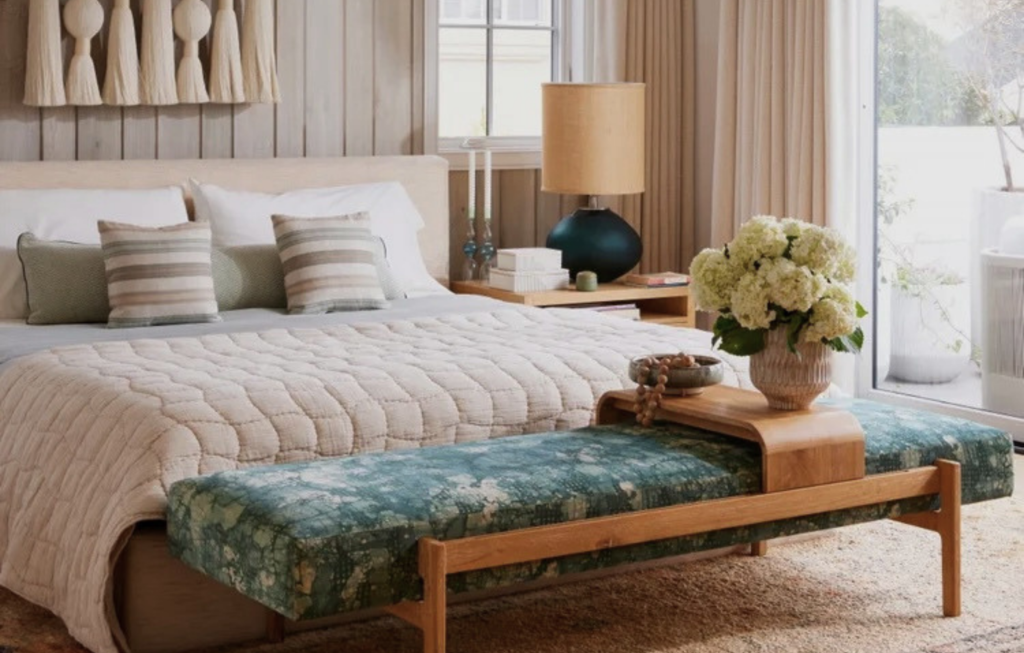
Texture and Materials Are Carrying the Design
Instead of bold patterns or big color moments, a lot of the interest is coming from materials.
You notice it more the longer you spend in a space.
One thing that kept coming up was the use of:
- Fluted or reeded wood details
- Natural stone with movement
- Plaster or softer wall finishes
- Materials that don’t feel overly polished
It’s not just texture on its own. Subtle patterns and woven materials are layered in, adding interest without making the space feel busy.
It gives spaces more depth without overwhelming them.
What stood out:
There’s a bigger focus on how things feel, not just how they look.
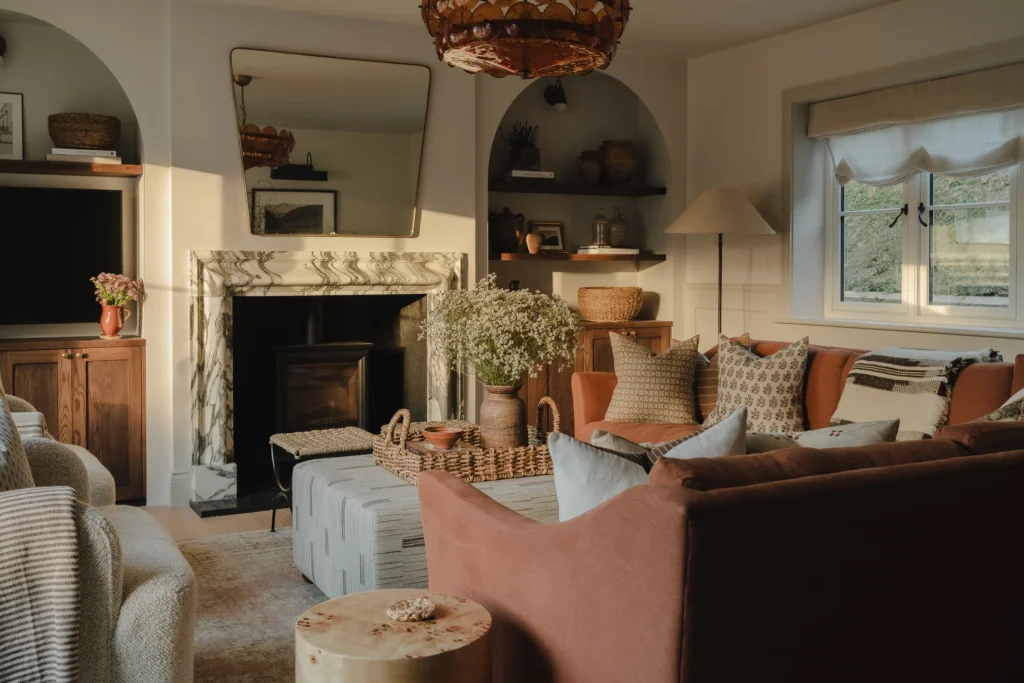
Wood Is What Ties It All Together
Wood showed up consistently across a lot of the spaces.
Not in a way that stood out on its own, but in how it was used throughout.
How wood was showing up:
- Medium and darker wood tones
- More visible grain and variation
- Wood carried through furniture, cabinetry, and smaller details
It’s not the focal point, but it plays a big role in how everything comes together.
It adds warmth and helps connect the rest of the materials, especially as more color and texture get layered in.
What stood out:
Wood is doing more behind the scenes, helping the space feel cohesive without drawing attention to itself.
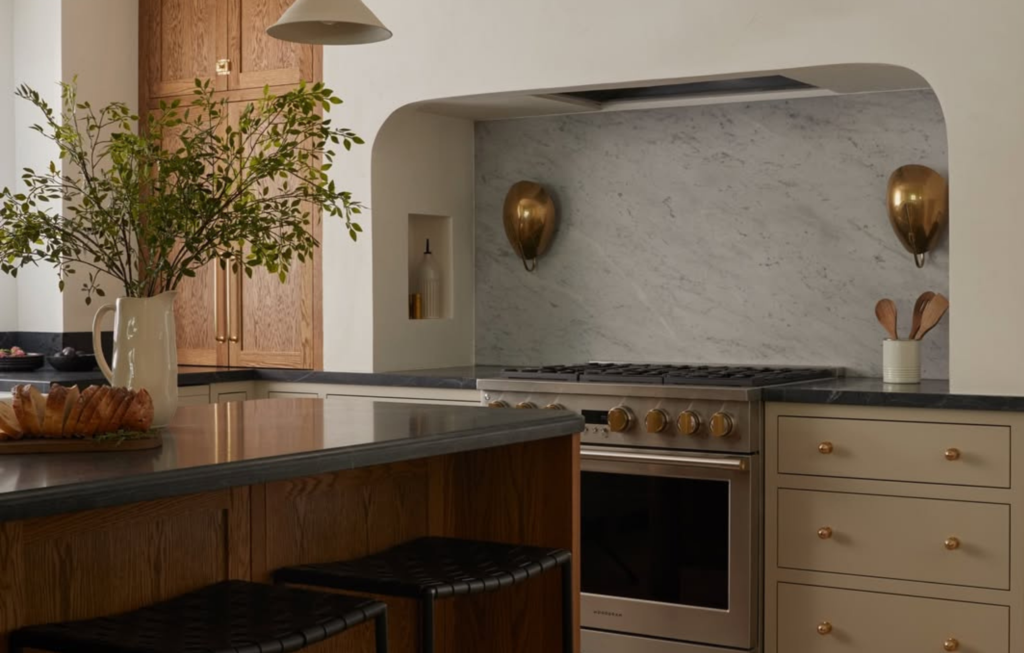
Traditional Details Are Back, Just Not How You Remember Them
There were a lot of traditional elements throughout KBIS, but none of it felt formal or overdone.
It felt quieter than that.
You see it in things like arched details, paneled cabinetry, and furniture with more classic shapes, just done in a simpler, more relaxed way.
Across different spaces, there were details like:
- Arches worked into cabinetry and openings
- Built-ins and millwork that actually felt intentional
- Cabinet styles that leaned more classic, but simplified
And it didn’t feel like someone was trying to create a “traditional home.”
It just felt comfortable and familiar, in a good way.
What stood out:
It wasn’t about going back to a specific style. It was about bringing in details that feel more lived-in and less temporary.
So What Are We Actually Taking From This?
After everything they saw, it really comes back to a few simple things.
Spaces feel more layered instead of perfectly matched. Materials and details are doing more of the work. Warmer tones are coming back in, but in a way that still feels balanced and intentional.
Nothing felt overly trendy. If anything, it felt like a move toward spaces that will last longer and feel better over time.
That’s exactly what we’re leaning into as we design our new furnished models this year. You’ll see more warmth coming through in the materials, more depth in the way color is used, and details that feel intentional instead of added on at the end. The goal isn’t to make a statement, it’s to create spaces that feel finished, cohesive, and easy to be in.
A lot of that is hard to fully explain until you walk through a space and experience it.
That’s what we’re most excited about. Seeing how these ideas come to life in real homes, and how they actually feel once everything is in place!